Tuesday, August 26, 2014

What the Insurance companies don't want you to know

I recently gave a talk at CAWEE (www.cawee.net), a networking group for entrepreneurs and executives.  The talk was adapted for their magazine  - Acclaim (http://issuu.com/cawee/docs/cawee_acclaim_issue_46_final/0) and I'm listing it here as well.


If you would like a pdf, please contact me and I'd be pleased to send it to you.

Wednesday, May 7, 2014

Is all publicity good?

I was featured in Acclaim, a magazine published by a great networking group - CAWEE (a women's networking group) .  Check them both out The article is titled - What do K
etchup Viscosity and Insurance Have in Common?  The Answer is Heather Freed


. 

Tuesday, April 8, 2014

4 key retirement planning decisions

I was quoted in this article which appeared in both the Toronto Star and The Waterloo Record.

4 key retirement planning decisions: Roseman

Whether you retire early or late, you will make some big financial decisions. So, plan ahead and think things through.

Whether you retire early or late, you will make some big financial decisions. So, plan ahead and think things through.

Whether you retire early or late, you will make some big financial decisions. So, plan ahead and think things through.
             
Whether you retire early or late, you will make some big financial decisions. Your goal is to turn your government benefits, pensions and savings into a lifetime income.
Let’s go through the decisions one by one.
 
When will you apply for Canada Pension Plan?
You can take CPP retirement benefits starting at age 60 and get a reduced amount. You can take benefits at 65 and get a full amount. Or you can defer benefits after 65 (until 70) and get an enhanced amount.
Service Canada has helpful questions to ask in deciding when to take your CPP retirement benefits.
How long did you make CPP contributions? How much did you put in?
What kind of lifestyle do you want when you retire?
How much do you get? You can find the amounts paid at age 65 at Service Canada’s website: The average payment is $633 a month, while the maximum payment is $1,038.
When will you apply for Old Age Security?
You must be 65 to qualify for an OAS pension. Starting in April 2023, the age of eligibility will increase gradually to age 67. This change will affect people born in 1958 or later.
You have the option of deferring your OAS pension for up to 60 months after the date you become eligible in order to get a higher amount.
You may want to defer OAS if your income is high enough to put you into clawback territory. The government calls it pension recovery tax.
You will have to repay part of your OAS if your income exceeds $71,592 in 2014. You will repay the whole thing if your income is $115,716. (This applies to individual income, not household income.)
How much do you get? The maximum monthly amount for OAS recipients is $551.54 in the current quarter.
You can also get a guaranteed income supplement if your income is low. The threshold is $16,728 including full OAS pension for individuals and $22,080 for couples who are both receiving full OAS pension.
 
When will you convert your RRSPs into income?
Everything you hold in registered retirement savings plans must be cashed in or converted to income by Dec. 31 of the year you turn 71.
You can convert RRSPs to a registered retirement income fund (RRIF) or a life annuity any time. You don’t have to wait until 71.
Once you open your RRIF, you will have to make a minimum withdrawal that grows each year and pay full tax on the withdrawal.
You may want to convert your RRSPs earlier than the deadline and transfer any money not required for daily spending into a tax-free savings account or non-registered investment account.
This strategy can help you get more control of your taxes and avoid being pushed into a higher tax bracket. For retirees, it’s the after-tax income you have to consider, not the pre-tax income.
 
Will you replace your employee benefits?
You may have benefits that are paid for or subsidized by your employer. These include dental, optical, pharmaceutical and chiropractic benefits.
These benefits may be cut back when you retire – or when you turn 65, even if you are still working. Should you get coverage on your own? How much would you pay?
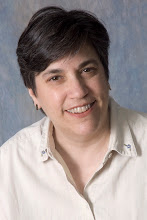
Heather Freed, a certified financial planner, helps guide people through the transition from group benefits to individual insurance.
The cost to replace health and dental benefits for a family is $250 to $350 a month, she says. The cost for a single person is $125 to $175 a month. These are average costs and exclude life insurance and disability benefits.
Before making a decision, there are two important things to know, says Freed. What is the value of your employee benefits? What coverage do you have and how many claims do you make?
If you’re a frequent user of employee benefits, find out if you can convert them to individual policies. The conversion deadline may be tight. So, pay attention and don’t delay.
These decisions can be challenging. Consider their implications carefully and find competent advisers to help you on your journey.

Ellen Roseman writes about personal finance and consumer issues. You can reach her at eroseman@thestar.ca or www.ellenroseman.com

Sunday, April 6, 2014

It's 2013 Tax Time :-(

Canadians had to pay over $1 billion in additional taxes in fiscal 2012 alone, mostly because what they reported on their tax returns didn't match the dollar amounts provided by employers, financial institutions and other sources, according to CRA. As well, the tax agency rejected almost one in every five tax credit and deduction claims that year.
 
In addition to collecting additional taxes, the CRA will charge interest, currently at a rate of 5% on any overdue tax amounts, Golombek points out. You fail to file a return by the deadline or under-report income repeatedly you may also have to pay a penalty.
 
Golombek has some tips to avoid costly errors:
  • Double-check that you've included all income from all sources;
  • Compare information on tax slips to investment statements or other supporting documents to ensure accuracy;
  • If you're missing information, do your best to get it; estimate amounts when information doesn't arrive in time to file;
  • Report all RRSP contributions, even if you're going to claim the deduction in a later year;
  • Determine if you are eligible for a deduction or credit before you claim it;
  • Make sure your current address is on file with employers, financial institutions and the CRA so that you receive all tax slips and correspondence;
  • Be punctual - file your return by the deadline, which is April 30, 2014 for most taxpayers, and respond to any direct CRA correspondence within the required timeframe.

Monday, February 24, 2014

More about Heather Freed

The following article appeared in the "Off Bay Street News" in the January 2014 issue of The Insurance and Investment Journal.

Monday, January 27, 2014

web sites of general interest

I am so tired of winter (and I assume that you are too), so I   thought I would do something different in this month's e-newsletter.

While browsing the web, I came across a few interesting sites.

The first one is 33 Amazing Ideas that will Make your House Awesome.  While none are particularly practical, I really like #5 - Beach sand under your work desk; #6 - spiral staircase slide; #14 - a wall that plays music when it rains; and if you live in a condo or apartment building, #33 - balcony pool.  Perhaps you prefer the pirate ship bedroom or the hammock over the stairs.  There's something in these pictures for everyone (even your cat). 

If Chris Hatfield turned you onto space, you can check out the photographs taken from space by Guy Laliberté, the founder of Cirque du Soleil. I saw some of these photos at the Thompson Landry Gallery in the Distillery District. They are works of art and some you need to stare at for a while before you can translate them to the map that you're used to seeing.  

Finally, for those of you who have a Bucket List and are curious what other people have put on their list, here are some popular ones. They range from drawing faces on all the eggs in your fridge; to go bungee jumping; to eat kangaroo meat (I think kangaroos are too cute); to put a piece of gum on the Market Theatre Gum Wall in Seattle (that I didn't know existed); to throw a dart at a map and travel to where it lands.

If nothing else, these web sites will make you forget that it's January in Toronto for a few minutes and put a smile on your face.

Sunday, December 8, 2013

Tax Tips for 2013


Each year I send out a reminder about items that you need to review prior to December 31st to ensure that you minimize the tax owing to CRA.  This year's list includes the following items

1. Non-eligible Dividends -  Starting in 2014, the federal government will be changing the personal tax calculation for non-eligible dividends. As a result of changes to the gross-up rate and DTC rate on non-eligible dividends, the marginal tax rates on these dividends will be going up in 2014.  The top combined federal/provincial marginal tax rates for non-eligible dividends are expected to increase 3.6 percentage points for Ontario residents in 2014.
 
2. Canada Pension Plan (CPP) Retirement Benefits  - If you are between ages 60 and 64 in 2013 and are considering taking CPP pension benefits prior to age 65, you may wish to apply by December 31, 2013. If you start CPP benefits in 2013, your pension will be reduced by a “downward monthly adjustment factor” of 0.54% for each month before age 65 that you began receiving it. Starting in 2014, however, the downward monthly adjustment factor will increase to 0.56% (and will gradually continue increasing to 0.6% by 2016), thus decreasing your CPP pension.
 
3. Charitable donations  - This year saw the introduction of the new Federal First-Time Donor’s Super Credit (FDSC), which was announced in the March federal budget. You can claim this credit if neither you nor your spouse or common-law partner has claimed the charitable donations tax credit in any of the five preceding tax years, from 2008 to 2012. The FDSC, which can be claimed once from the 2013 to 2017 taxation years, provides an additional 25% tax credit on total monetary donations up to $1,000 that are made after March 20, 2013. When added to the regular federal charitable donations tax credit, tax savings would be 40% for total monetary donations up to $200, and 54% for total monetary donations between $200 and $1,000.  December 31 is the last day to make a donation and get a tax receipt for 2013.
 
 
4. Tax Free Savings Plan (TFSA) – Planning to take money from your TFSA soon?  Withdraw the amount before year-end, so you’re able to re-contribute as soon as Jan. 2, 2014.  At that time, you’ll have $5500 of new TFSA contribution room, plus whatever amount you withdrew.  On the other hand, if you wait until January 2014 to withdraw, you’ll have to wait until 2015
 
5. Tax-Loss Selling  - Tax-loss selling involves selling investments with accrued losses at year end to offset capital gains realized elsewhere in your portfolio. Any capital losses that cannot be used currently may either be carried back three years or carried forward indefinitely to offset capital gains in other years. Note that if you purchased securities in a foreign currency, the gain or loss may be larger or smaller than you anticipated once you take the foreign exchange component into account. In order for your loss to be immediately available for 2013 (or one of the prior three years), the settlement must take place in 2013, which means the trade date must be no later than December 24, 2013.
 
6. RRSP Contributions  -Although you have until March 3, 2014 to make RRSP contributions for the 2013 tax year, contributions made as early as possible will maximize tax-deferred growth. If you have maximized RRSP contributions in previous years, your 2013 RRSP contribution room is limited to 18% of income earned in 2012, with a maximum contribution of $23,820, less any pension adjustment.
7. Registered Disability Savings Plans (RDSPs)  - RDSPs are tax-deferred savings plans open to Canadian residents eligible for the Disability Tax Credit, their parents and other eligible contributors.  Up to $200,000 can be contributed to the plan until the beneficiary turns 59, with no annual contribution limits. While contributions are not tax deductible, all earnings and growth accrue on a tax-deferred basis. Federal government assistance in the form of matching Canada Disability Savings Grants (CDSGs) and Canada Disability Savings Bonds (CDSBs) may be deposited directly into the plan up until the year the beneficiary turns 49. The government will contribute up to a maximum of $3,500 CDSG and $1,000 CDSB per year of eligibility, depending on the net income of the beneficiary’s family. Note:  since unused CDSG and CDSB room can be carried forward for up to ten years.
8. Fees: Remember to pay all investment management fees, tuition fees, safe deposit box fees, accounting and legal fees if deductible, childcare expenses, alimony, medical expenses and any business expenses by December 31 if your intent is to deduct them on your 2013 tax return.
 
 
Tax strategies should be reviewed by a qualified tax specialist and, where appropriate, your investment adviser, to ensure all appropriate regulations, laws and individual personal considerations are taken into count.