
Monday, February 24, 2014
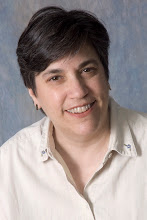
More about Heather Freed
The following article appeared in the "Off Bay Street News" in the January 2014 issue of The Insurance and Investment Journal.


Monday, January 27, 2014
web sites of general interest
I
am so tired of winter (and I assume that you are too), so I thought I
would do something different in this month's e-newsletter.
While browsing the web, I came across a few interesting sites.
The first one is 33 Amazing Ideas that will Make your House Awesome.
While none are particularly practical, I really like #5 - Beach sand
under your work desk; #6 - spiral staircase slide; #14 - a wall that
plays music when it rains; and if you live in a condo or apartment
building, #33 - balcony pool. Perhaps you prefer the pirate ship
bedroom or the hammock over the stairs. There's something in these
pictures for everyone (even your cat).
If Chris Hatfield turned you onto space, you can check out the photographs taken from space
by Guy Laliberté, the founder of Cirque du Soleil. I saw some of these
photos at the Thompson Landry Gallery in the Distillery District. They
are works of art and some you need to stare at for a while before you
can translate them to the map that you're used to seeing.
Finally, for those of you who have a Bucket List and are curious what other people have put on their list, here are some popular ones.
They range from drawing faces on all the eggs in your fridge; to go
bungee jumping; to eat kangaroo meat (I think kangaroos are too cute);
to put a piece of gum on the Market Theatre Gum Wall in Seattle (that I
didn't know existed); to throw a dart at a map and travel to where it
lands.
If
nothing else, these web sites will make you forget that it's January in
Toronto for a few minutes and put a smile on your face.
Sunday, December 8, 2013
Tax Tips for 2013
Each year I send out a reminder
about items that you need to review prior to December 31st to ensure that you minimize
the tax owing to CRA. This year's list includes the following items
1. Non-eligible Dividends - Starting in 2014, the federal government will be changing the personal tax calculation for non-eligible dividends. As a result of changes to the gross-up rate and DTC rate on non-eligible dividends, the marginal tax rates on these dividends will be going up in 2014. The top combined federal/provincial marginal tax rates for non-eligible dividends are expected to increase 3.6 percentage points for Ontario residents in 2014.
2. Canada Pension Plan (CPP) Retirement Benefits - If you are between ages 60 and 64 in 2013 and are considering taking CPP pension benefits prior to age 65, you may wish to apply by December 31, 2013. If you start CPP benefits in 2013, your pension will be reduced by a “downward monthly adjustment factor” of 0.54% for each month before age 65 that you began receiving it. Starting in 2014, however, the downward monthly adjustment factor will increase to 0.56% (and will gradually continue increasing to 0.6% by 2016), thus decreasing your CPP pension.
3. Charitable donations - This year saw the introduction of the new Federal First-Time Donor’s Super Credit (FDSC), which was announced in the March federal budget. You can claim this credit if neither you nor your spouse or common-law partner has claimed the charitable donations tax credit in any of the five preceding tax years, from 2008 to 2012. The FDSC, which can be claimed once from the 2013 to 2017 taxation years, provides an additional 25% tax credit on total monetary donations up to $1,000 that are made after March 20, 2013. When added to the regular federal charitable donations tax credit, tax savings would be 40% for total monetary donations up to $200, and 54% for total monetary donations between $200 and $1,000. December 31 is the last day to make a donation and get a tax receipt for 2013.
4. Tax Free Savings Plan (TFSA) – Planning to take money from your TFSA soon? Withdraw the amount before year-end, so you’re able to re-contribute as soon as Jan. 2, 2014. At that time, you’ll have $5500 of new TFSA contribution room, plus whatever amount you withdrew. On the other hand, if you wait until January 2014 to withdraw, you’ll have to wait until 2015
5. Tax-Loss Selling - Tax-loss selling involves selling investments with accrued losses at year end to offset capital gains realized elsewhere in your portfolio. Any capital losses that cannot be used currently may either be carried back three years or carried forward indefinitely to offset capital gains in other years. Note that if you purchased securities in a foreign currency, the gain or loss may be larger or smaller than you anticipated once you take the foreign exchange component into account. In order for your loss to be immediately available for 2013 (or one of the prior three years), the settlement must take place in 2013, which means the trade date must be no later than December 24, 2013.
6. RRSP Contributions -Although you have until March 3, 2014 to make RRSP contributions for the 2013 tax year, contributions made as early as possible will maximize tax-deferred growth. If you have maximized RRSP contributions in previous years, your 2013 RRSP contribution room is limited to 18% of income earned in 2012, with a maximum contribution of $23,820, less any pension adjustment.
7. Registered Disability Savings Plans (RDSPs) - RDSPs are tax-deferred savings plans open to Canadian residents eligible for the Disability Tax Credit, their parents and other eligible contributors. Up to $200,000 can be contributed to the plan until the beneficiary turns 59, with no annual contribution limits. While contributions are not tax deductible, all earnings and growth accrue on a tax-deferred basis. Federal government assistance in the form of matching Canada Disability Savings Grants (CDSGs) and Canada Disability Savings Bonds (CDSBs) may be deposited directly into the plan up until the year the beneficiary turns 49. The government will contribute up to a maximum of $3,500 CDSG and $1,000 CDSB per year of eligibility, depending on the net income of the beneficiary’s family. Note: since unused CDSG and CDSB room can be carried forward for up to ten years.
8. Fees: Remember to pay all investment management fees, tuition fees, safe deposit box fees, accounting and legal fees if deductible, childcare expenses, alimony, medical expenses and any business expenses by December 31 if your intent is to deduct them on your 2013 tax return.
Tax
strategies should be reviewed by a qualified tax specialist and, where
appropriate, your investment adviser, to ensure all appropriate regulations,
laws and individual personal considerations are taken into count.
Friday, November 1, 2013
TIFF - Toronto International Film Fetival
Every fall I TIFF
I see between 20 and 25 movies most years beginning
the Friday after Labour Day and ending a week later on the Sunday. (TIFF starts
Thursday evening, but I only start on the Friday.) As the excitement builds in
Toronto in the weeks leading up to it, people start asking me about what’s
involved. So I thought I’d put it down for all of you.
I often get asked “How do you get tickets for
TIFF?” There are 3 answers:
1. The simple way - After Labour Day – you can go down to the TIFF box office or go
online to www.tiff.netand
purchase single tickets. You can also try the TIFF box office at the movie
theatre the day of a movie.
2. TIFF chooses way – The beginning of July, you choose from a number of film packages that
TIFF puts together and purchase the voucher. Around Labour Day, you find out
what movies you will see.
3. What I do – The beginning of July, I decide how many movies I want to see and I
purchase movie “vouchers”. The middle of August, I go online or buy the Program
Book and see what movies I would like to see. I then match that list up with
the movie schedule and select first and second choices for the different time
slots I am available. Towards the end of August, I get my “selection time
slot”, I go online and pick my movies. On Labour Day, I go down to the TIFF box
office to pick up my tickets. The movies start the Thursday evening after
Labour Day, run all week and end the Sunday 11 days (or so) later. During that
time, I normally see around 20 movies – mostly documentaries and foreign films
(that are unlikely to play in Toronto).
I normally see 2 or 3 films in a day. (I tried to
see 4 in a day one year – but found it too much!) Some of the movies I see by
myself, while I go to others with friends. I have a bag with me that includes
snacks, a book (just in case, but this year I read my Kobo for maybe 30 minutes
during the week), water, an extra sweater or jacket and some days an umbrella.
The best part of TIFF – especially the first half of the festival, is
that the director and / or actors are normally available after the movie for a
Q & A and you learn about the background of the movies. By the second
or third day, while standing in line waiting to get into the movie theatres,
you hear complete strangers start up conversations with other people in the
line “What have you seen so far that was good?”
This year I saw 19 movies - 2 were Hollywood ones. Some were better than others, but I lucked out this year and didn’t see any “5 beer” movies (the number of beers you need to drink to sit through the movie) and I did see a couple of “Ice Cream Sundae” movies (at the opposite end of the spectrum from the “5 beers”).
TIFF 2013 – My Movies
This year, I saw nineteen movies over 7 days. There are two tricks to the selection process. Interpreting the TIFF film critics write up and fitting the movies that sound good into your schedule. Most movies play 2 or 3 different times in different theatres, so you’re constantly reprioritizing. The list of movies that I saw included:
Amazonia – a little unbelievable, but great 3D shots of the wildlife in the Amazon. Can you imagine a domesticated monkey surviving 5 minutes in the wild? This monkey joins a troop of wild capuchins. It is a France / Brazil co-production
Born and raised in captivity, a capuchin monkey suddenly finds himself fighting for survival in the wilds of the Amazon jungle in this remarkable live-action adventure, shot on location in breathtaking 3D.
A Place in Heaven – the main character in the Israeli film is a secular soldier. The film follows his life and personal relations over 40 years.
The fateful contract between a secular Israeli army officer and a devout young Holocaust survivor has profound and unexpected consequences, in this sprawling, decades-spanning epic from director Yossi Madmony (Restoration).
Attila Marcel – a great feel good French movie. A lot of the script reminded me of Sylvain Chomets animated films – especially The Triplets of Bellville. A great performance by Paul, the main character, played by Guillamame Gouix, who has only one word of dialogue (at the end of the movie).
Director Sylvain Chomet (The Triplets of Belleville, The Illusionist) invokes memories of Buster Keaton and Jacques Tati in his first live-action film, about a mute, sweet-natured man-child whose reawakened childhood memories unleash marvellous musical fantasies.
Bethlehem – This Israeli movie, includes a young man (Sanfur), a Palestinian, who is being groomed by the Israeli Secret Police (Shin Bet) officer, Razi. The script was co-written by an Israeli and a Muslim and portrays both sides of this “war”.
Recruited as an informant by the Israeli secret service Shin Bet, a young Palestinian man finds himself caught between two very different kinds of loyalty when he discovers that his employers are plotting to assassinate his radical brother. First-time feature director Yuval Adler spent years interviewing Shin Bet officers and Palestinian militants to create this complex, intelligent, and timely tragedy.
Border – This Italian movie is about two Orthodox Muslim Syrian sisters who try to escape from Syria and the series of twists and turns in the plot. Between you and I – many of the scenes are really far-fetched.
When two sisters learn that a member of their family has decided to desert the Syrian Army and join the Free Army, they must embark on a hazardous journey to Turkey, in this powerful account of contemporary Syria from filmmaker Alessio Cremonini.
Enough Said – this movie came out in general release in September 2013. The comedic timing was fantastic, but you can wait and watch this Hollywood movie on NetFlicks
This smart and decidedly modern romantic comedy from indie stalwart Nicole Holofcener follows the misadventures of a divorcée who finds herself making a new friend — and dating that new friend’s ex-husband at the same time. Enough Said stars Julia Louis-Dreyfus, Catherine Keener and the late James Gandolfini in one of his final screen roles.
Friends from France –This is a French / German / Canada / Russian co-production about 2 French University age kids who go on a tour to Russia (and sneak away to visit with Refusniks). Their innocence disappears over the 2 week tour. Apparently, they managed to recreate the mood and times very well as per the Q & A following the movie.
Set in Odessa in 1979, this uniquely emotional political thriller recreates meticulously the deep-freeze of the Soviet Union at the crest of the Cold War while following a pair of French cousins in their clandestine effort to reach out to the so-called refuseniks — Jews repressed by the Brezhnev regime.
Giraffada – This Italian / German / French /Palestinian) co-production told the story from the perspective of a 10 year old Palestinian boy. Ahmad Bayatra was great in the role of Ziad. This would be a feel good movie if he didn’t think all Israelis were either trigger happy, or womanizers. My nephew says everything is better if there’s a penguin in it. In this case, it’s a giraffe (or two).
In this wild and heartfelt adventure epic, a 10-year-old Palestinian boy from the West Bank must travel to Tel Aviv to secure a companion for a distraught giraffe after an air strike kills its mate.
Gravity – in general release October 2013. This Hollywood movie kept me at the edge of my seat – go see it in 3D. 3D IMAX if you dare.
George Clooney and Sandra Bullock star in this highly anticipated 3D space thriller from acclaimed director Alfonso Cuarón (Children of Men, Y Tu Mamá También).
Half of a Yellow Sun – this was my favourite film this year. It was co-produced by the UK and Nigeria. It was based on the book by Chinananda Ncozi Adiche. Great plot, character development and it is based on true events. This movie could be transported to any of the various conflicts and genocides going on today.
Chiwetel Ejiofor (12 Years A Slave, Children of Men) and Thandie Newton (Crash, The Pursuit of Happyness) star in this epic chronicle of family ties and war from celebrated Nigerian playwright Biyi Bandele
Hi Ho Mistahey! – This Canadian documentary is scheduled to play at TIFF and will probably play as a documentary on CBC Newsworld. It is a documentary about the sad state of affairs in the First Nation communities in Ontario.
Legendary documentary filmmaker and activist Alanis Obomsawin chronicles the Attawapiskat First Nations campaign to draw global attention to the Canadian government's shocking neglect of Aboriginal youth education.
Manuscripts Don’t Burn –This Iranian movie focuses on the writers remaining in Iran and the censorship and conditions that they live under. There are no credits in this film – due to Iranian censorship laws and none of the actors are still in Iran. The director, Mohammed Rasoulof has spent time in Iranian prisons.
Director Mohammad Rasoulof’s latest tackles head-on the machinations of censorship in Iran, detailing the true story of a failed 1995 assassination plot by the Iranian regime against twenty-one writers and journalists.
Midway – the photography of the Albatros documenting their life cycle on the Pacific Island of Midway are magnificent. The voice over needs some work. This is a USA production.
In bringing the ambitious project Midway to the big screen, the visual artist and first time director Chris Jordan worked with highly skilled collaborators. Producer Stephanie Levy, editor and story by scribe Sabine Emiliani (March of the Penguins), composer and Oscar nominated sound designer Erik Aadahl (Argo, Tree of Life), and Oscar award winning sound designer Ethan Van der Ryn (Lord of the Rings, Argo) discussed the making of this unique film.
Omar – This is a Palestinian production that takes place on both sides of the wall in the West Bank. There is love, betrayal, intrigue and murder.
Academy Award-nominated Palestinian director Hany Abu Assad (Paradise Now) won the Un Certain Regard Jury Prize at this year’s Cannes Film Festival for this noir-ish psychological thriller set in the occupied West Bank.
Palestine Stereo – Palestine/ Tunisia / France / Norway / UAE/ Italy / Switzerland were all involved in this movie. I picked it because the write up had a Canadian connection – but it was a far stretch. What happens in the end is left up in the air, but my impression is that these two moderate brothers became activists for the Palestinian cause.
Palestinian director Rashid Mashawari follows his widely acclaimed dark comedy Laila’s Birthday with this compelling and ironic drama about two brothers on the West Bank who, rendered homeless by an Israeli air strike, hustle odd jobs to raise enough money to emigrate to Canada.
Real – This Japanese Sci-Fi movie had lots of twists and turns. Most of the movie occurred in the “minds” of the two main characters.
Master filmmaker Kiyoshi Kurosawa (Cure, Tokyo Sonata) returns with this story of a man who uses an advanced neurological technology to enter the frightening mindscape of his comatose lover.
The Summer of Flying Fish – the film I liked the least this year, a co-production of Chile and France. It was a coming of age film, but it dragged and the character development was not great
In this subtle and atmospheric allegory by first-time feature director Marcela Said, a teenaged girl holidaying at a lake house in southern Chile experiences a bittersweet coming of age as she faces disillusionment in love and confronts the incoherency and intolerance of her affluent family’s political views.
Trap Street - This film from China deals with love versus National Security and is a reminder that China is not a free country.Big brother is theoretically always watching. The most incongruious scene was when they sang the folk song, Donna Donna
A poignant and engaging thriller, Vivian Qu’s feature debut plunges us into the fascinating world of state surveillance in China as it follows a digital mapping surveyor’s investigation of an "off-the-grid" hidden alley.
The Wonders – This Israeli film has a light hearted side with cartoons coming to life, but it also explores the seedy side of Jerusalem and the world of “religious men” being used as “faith healers” to get money from the downtrodden.One of the main characters, Ariel, lives in the here and now, something we all should aspire to.
Lewis Carroll meets Carol Reed in this dizzyingly funny and fantastical farce from Israeli director Avi Nesher, about a good-natured slacker who becomes embroiled in a labyrinthine conspiracy in the weird criminal-religious underbelly of Jerusalem.
|
Thursday, October 31, 2013
e-Newsletters
The following article was posted in Investment Executive in March 2013
Sending out a regular newsletter to your clients can provide them with important news, as well as a reminder that you're available to help in case they happen to need anything
By Susan Yellin | March 2013
There's a lot going on in your clients' lives, so keeping yourself in front of them can be challenging. Enter the advisor e-newsletter. Informative, newsy, interesting - all are required to pique clients' interest.
Heather Freed, an independent certified financial planner (CFP) in Toronto, has been sending out monthly e-newsletters for the past six years. Although providing clients with information is her No. 1 priority with the e-newsletter, it also sparks a reminder to clients that she's there to help. "Every time I send out a newsletter," Freed says, "I get emails and phone calls on topics from the newsletter and also on unrelated topics."
Ideas for her e-newsletter come from a variety of sources. There are those subjects that have an obvious timing bent - her November e-newsletter deals with yearend tax planning, for example. And this month, her e-newsletter is about items people tend to overlook on their tax returns.
Although Freed has both the chartered life underwriter and CFP designations, she doesn't write about insurance or investment tips; rather, she concentrates on more general, "in the news" finance topics. For example, in January, Freed included several stories about out-of-country travel insurance. Although she has clients who do come to her for travel insurance, Freed also has clients who get their insurance through their work benefits, or are a spouse of such an employee. The latter group may think they get the same coverage as their spouses, but may not. "I thought it was important to tell these people," says Freed, "what is and what isn't covered."
She recently used a topic she first saw outlined by the Canadian Life and Health Insurance Association Inc. about a "virtual shoebox," a document that outlines to an executor where all of a client's important information is kept in the event of his or her death. "I know a whole bunch of people who had a family member die recently," Freed says. "And when this happens, there's stuff nobody can find. It's important to keep this document up to date. I had more click-throughs to that link than I have had with any other item I have put into my newsletter since I started doing it."
E-newsletters should have a 250-word maximum, Freed suggests. Otherwise, write an executive summary in the e-newsletter with a hyperlink to your blog. Ensure you're also on LinkedIn and Twitter.
Also make sure that your e-newsletter reflects you and what you do personally, Freed advises: "When you're dealing with me as an advisor, you are dealing with me and my personality. And I feel it's important that my website, my newsletter and my blog all represent me, and not just our profession."
Decide how often you want to send out an e-newsletter and stick to that plan. If you've missed several e-newsletters, don't send them out once a week until you catch up and then go back to monthly. Says Freed: "People like to know there's some consistency to them."
If you intend to use an e-newsletter as a sales tool, be careful. "I do it as a service," says Freed. "I think if you're trying to sell something, people don't read them."
© 2013 Investment Executive. All rights reserved.
Heather Freed, an independent certified financial planner (CFP) in Toronto, has been sending out monthly e-newsletters for the past six years. Although providing clients with information is her No. 1 priority with the e-newsletter, it also sparks a reminder to clients that she's there to help. "Every time I send out a newsletter," Freed says, "I get emails and phone calls on topics from the newsletter and also on unrelated topics."
Ideas for her e-newsletter come from a variety of sources. There are those subjects that have an obvious timing bent - her November e-newsletter deals with yearend tax planning, for example. And this month, her e-newsletter is about items people tend to overlook on their tax returns.
Although Freed has both the chartered life underwriter and CFP designations, she doesn't write about insurance or investment tips; rather, she concentrates on more general, "in the news" finance topics. For example, in January, Freed included several stories about out-of-country travel insurance. Although she has clients who do come to her for travel insurance, Freed also has clients who get their insurance through their work benefits, or are a spouse of such an employee. The latter group may think they get the same coverage as their spouses, but may not. "I thought it was important to tell these people," says Freed, "what is and what isn't covered."
She recently used a topic she first saw outlined by the Canadian Life and Health Insurance Association Inc. about a "virtual shoebox," a document that outlines to an executor where all of a client's important information is kept in the event of his or her death. "I know a whole bunch of people who had a family member die recently," Freed says. "And when this happens, there's stuff nobody can find. It's important to keep this document up to date. I had more click-throughs to that link than I have had with any other item I have put into my newsletter since I started doing it."
E-newsletters should have a 250-word maximum, Freed suggests. Otherwise, write an executive summary in the e-newsletter with a hyperlink to your blog. Ensure you're also on LinkedIn and Twitter.
Also make sure that your e-newsletter reflects you and what you do personally, Freed advises: "When you're dealing with me as an advisor, you are dealing with me and my personality. And I feel it's important that my website, my newsletter and my blog all represent me, and not just our profession."
Decide how often you want to send out an e-newsletter and stick to that plan. If you've missed several e-newsletters, don't send them out once a week until you catch up and then go back to monthly. Says Freed: "People like to know there's some consistency to them."
If you intend to use an e-newsletter as a sales tool, be careful. "I do it as a service," says Freed. "I think if you're trying to sell something, people don't read them."
© 2013 Investment Executive. All rights reserved.
Friday, September 20, 2013
Cross-border Banking & US Taxes
| For anyone who spends time in the US, it's great to be able to
go to an ATM machine and take out US cash if you run short. However, if
you spend several months at a time, banking fees and charges for money
exchange can really add up. The Toronto Star recently ran an article on
the options for US bank accounts versus a Canadian account in US funds and
the same options for credit cards. Which one is right for you?
The article also discusses buying property in the US. Check it out.
Just remember, you must keep track of the amount of time that
you spend in the US, or you could end up having to pay US income and / or
estate taxes. Check out the US IRS web site for the calculation of the Substantial
Presence test as well as the exemptions. If you own property or other
assets in the US, you may have other tax obligations. Please check with an
accountant who specializes in this area.
Addendum: Dec. 12, 2013 - Check out this article for a simple explanation of when a Canadian would be considered a resident by the US for US tax purposes. |
I have a dream
I was at a BBQ last week and
as I walked in, I noticed a Get Well Card that everyone was signing - so I
asked who it was for.
One of our friends was just
diagnosed with an aggressive form of cancer and was in Princess Margaret
Hospital undergoing treatment. She is too ill to get out of bed - so
obviously is not working. Her husband was recently "downsized",
so her self employment income has been supporting her family and it just came
to a screeching stop. Unfortunately, she never got around to purchasing
disability or critical illness insurance. The family is concerned about
how they are going to pay their basic bills - let alone additional expenses
that will come up because she is ill.
So. I have a dream (two actually):
1. To
wish my friend (any everyone else who is ill) a speedy recovery
2. To
make sure that everyone I come in contact with, reviews their insurance and
financial plans, to minimize the risk that you and your family will be at
financial risk if the "God Forbid" happens to you.
If you need assistance - give
me a call.
Subscribe to:
Posts (Atom)


 Posts
Posts

